Mt. Kailash – an Enlightening Journey
Some journeys take you across distance. Others take you inward. A journey to Mt. Kailash does both.
Rising to 6,638 m (21,778 ft) in the remote west of Tibet, Mt. Kailash is revered by Hindus, Buddhists, Jains, and followers of Bon as one of the most sacred places on Earth. For Hindus, it is the abode of Lord Shiva. For Buddhists, it is the seat of supreme bliss. For Jains, it is where their first Tirthankara attained liberation. For the Bon, it is the sacred nine-story swastika mountain, the seat of spiritual power. No single faith claims the mountain. It belongs to all who seek something greater than themselves.
The Center of the Universe
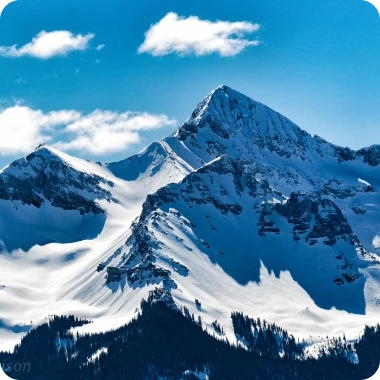
Across Asia’s oldest traditions, Mt. Kailash is not simply a mountain. It is the axis of the world, the cosmic pillar around which all existence turns. Hindu and Buddhist texts call it Mount Meru, the spiritual center of the universe, where heaven and earth meet. It’s perfect, diamond-like form, with four distinct faces aligned to the four cardinal directions, seems to confirm what ancient seekers understood intuitively – that this is a place where the physical world touches the eternal.
Four of Asia’s great rivers, the Indus, Sutlej, Brahmaputra, and Karnali (a major tributary of the Ganges), rise in the surrounding region, flowing outward like life itself radiating from a single source. To stand before Kailash is to feel what generations of pilgrims have described – a sense of being at the still point around which everything else moves.
Walking the Sacred Circle
Unlike a typical mountain expedition, no one climbs Kailash. Its summit remains untouched, considered too sacred to be trodden by human feet. Instead, pilgrims and travelers walk the Kora, a 52 km (32 mile) circumambulation around the mountain’s base. Hindus and Buddhists walk it clockwise, while followers of Bon walk it counterclockwise, each honoring the mountain in their own way.
The journey combines driving with three days of walking, passing through some of the most dramatic scenery in the world: the turquoise waters of Lake Manasarovar, windswept high plains, fluttering prayer flags, and skies so vast they seem to erase the line between earth and heaven. Along the way, you cross the Dolma La Pass at 5,630 m (18,470 ft), the highest point of the Kora. Pilgrims believe that completing a single circuit cleanses the sins of a lifetime, and that the journey is a symbolic death and rebirth.
Preparing for the Journey
A trip to Mt. Kailash requires careful preparation. Permits, altitude acclimatization, and a knowledgeable guide are essential given the remoteness and physical demands of the region. Allowing time to adjust to the altitude, traveling at a steady pace, and trusting experienced local support make all the difference between a difficult trek and a deeply rewarding one.
For those ready to take on this journey, the reward is not just a photograph from a legendary landscape, but a shift in perspective that lingers long after the trip ends.